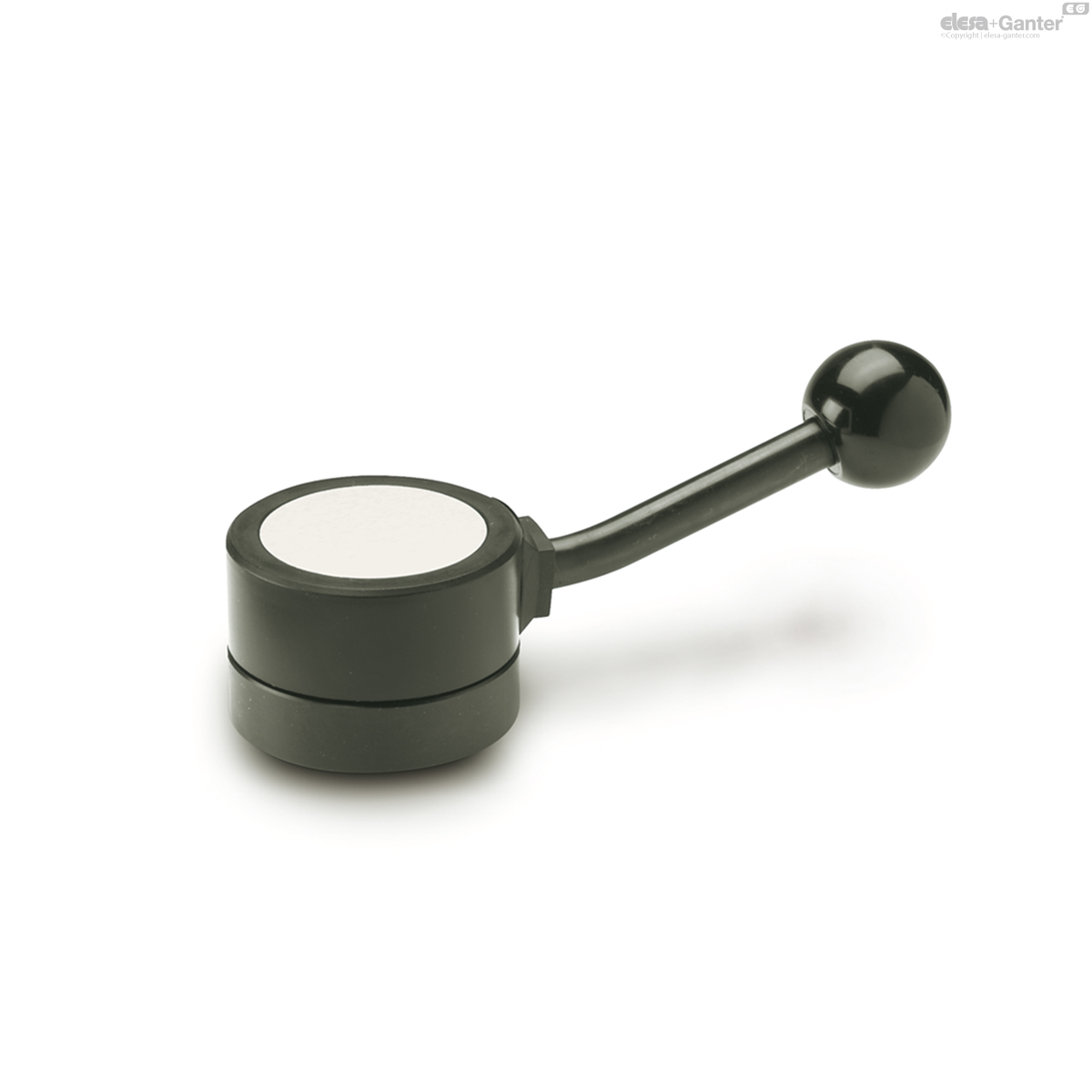
215-60-K14-A
GN 215 Indexeringshendels

Lt: 1-2 weken Alle maten en varianten van GN 215
🔒 Prijzen, actuele voorraad & CAD-downloads
Meld u aan om uw prijzen en voorraad te zien, CAD-bestanden te downloaden en direct online te bestellen.
Aanmelden Account aanvragen Technische fiche
Technische gegevens
- Code
- GN 215-60-K14-A
- d1
- 60
- d2 H7
- K 14
- d3
- 32
- d4
- 5.2
- d5
- 50
- h1
- 39
- h2
- 15
- h3 max.
- 18.5
- k
- 36
- Length l
- 125
- w +0.5°
- 19°

- 619
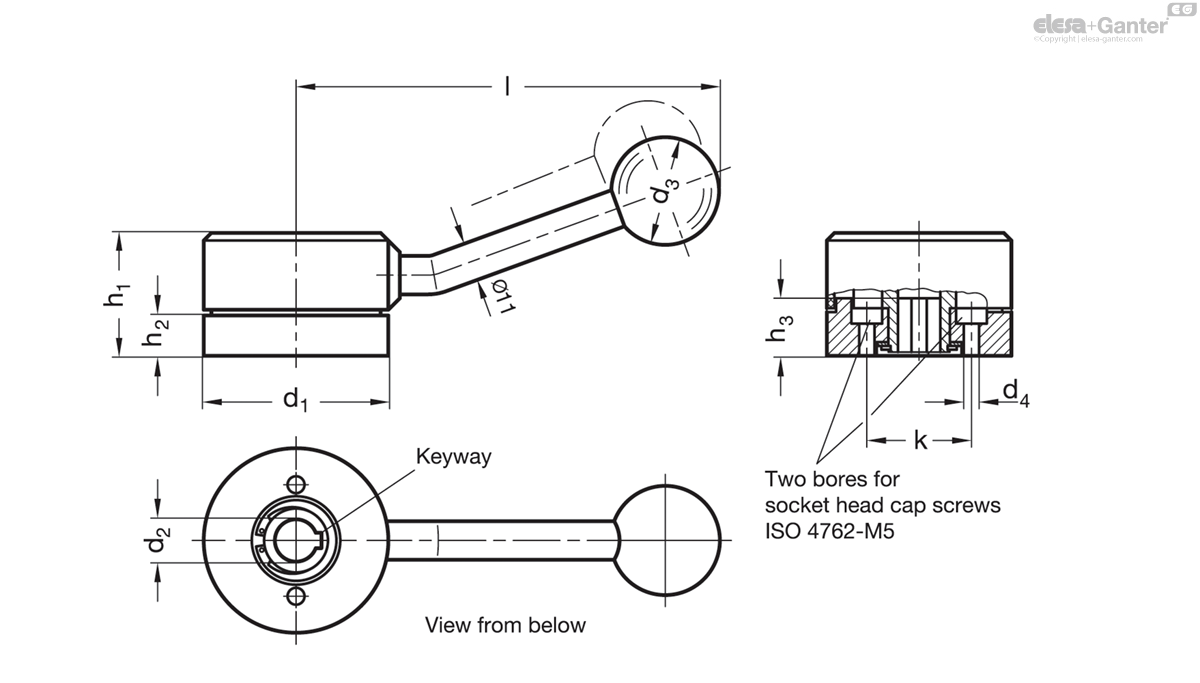
Types
Types
- Type A: Without serrations
- Type B: With gear rim (30 serrations)
Lever
Lever
Steel
- Blackened
- Keyway
- Tolerance slot width P9
- Bore K 10: DIN 6885-1
- Bore K 12 ... K 16: DIN 6885-2
Cover
Cover
Plastic
- Black
- with affixed PVC cover disk in light grey
Ball knob DIN 319
Ball knob DIN 319
Plastic, phenolic resin (PF)
Black, shiny finish
With indexing levers GN 215 shafts can be turned through a predetermined angle and positively locked. To index, lift the lever against spring pressure from serrations (one hand control).
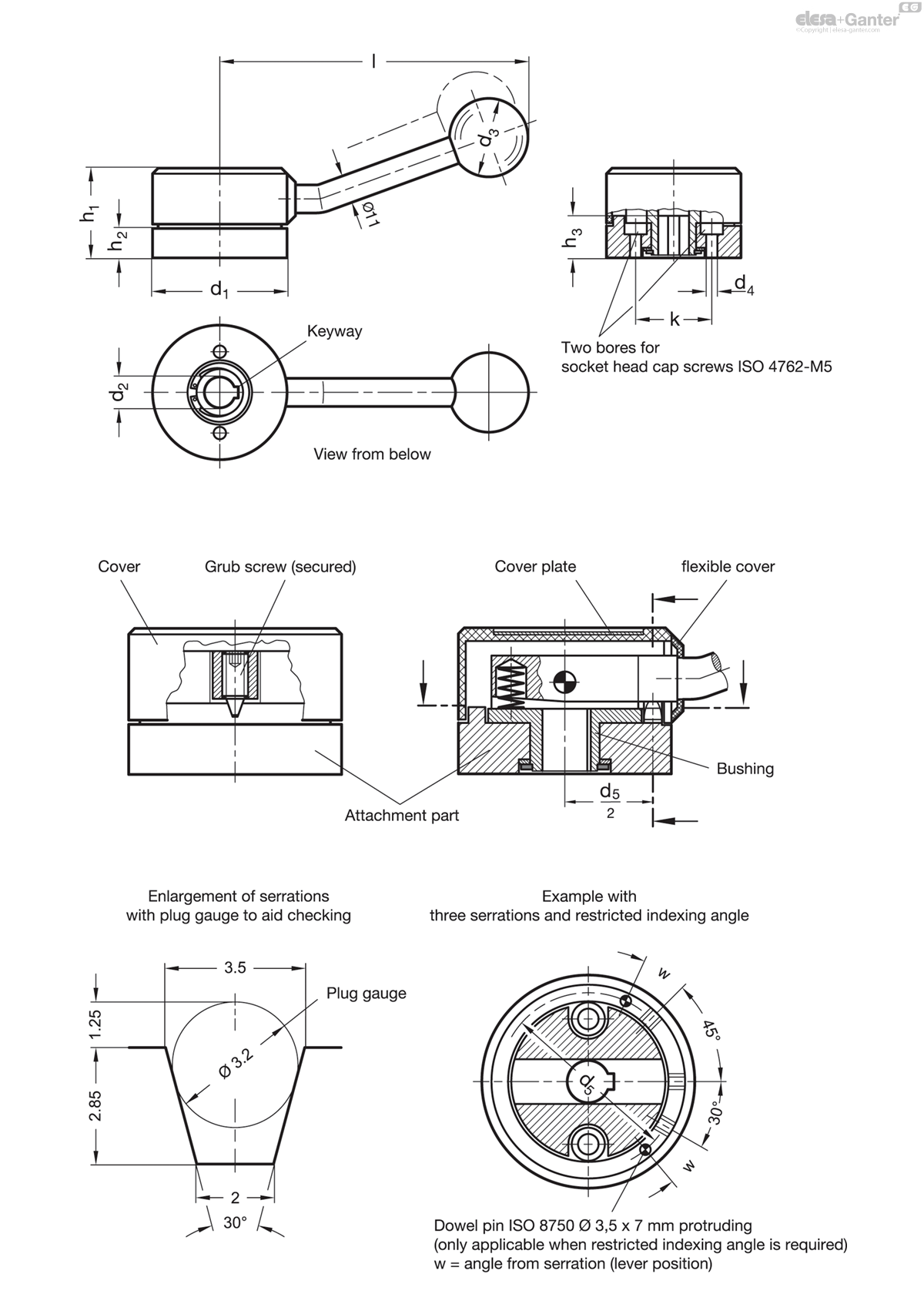
Limiting the indexing angle can be achieved with two dowels (sketch).
The bushing is connected to the shaft via keyway.
The location flange is bolted to the machine with two socket head cap screws (M 5).
The lever, via the location pin, provides the connection between shaft and location flange.
The serrations are protected from swarf and similar particles by the cover. This cover can be inserted by hand (elastic segments engage into a groove) and removed with a screw driver.
- Serrations, restricted angle to drawing
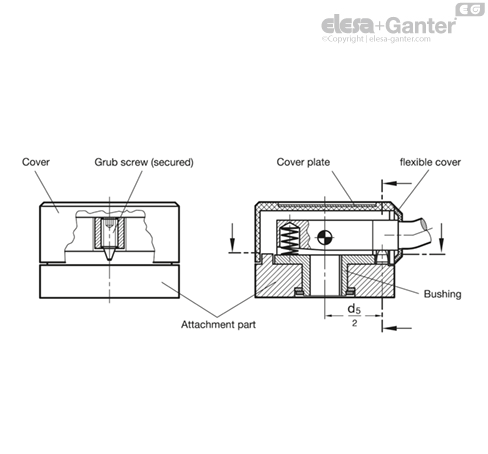
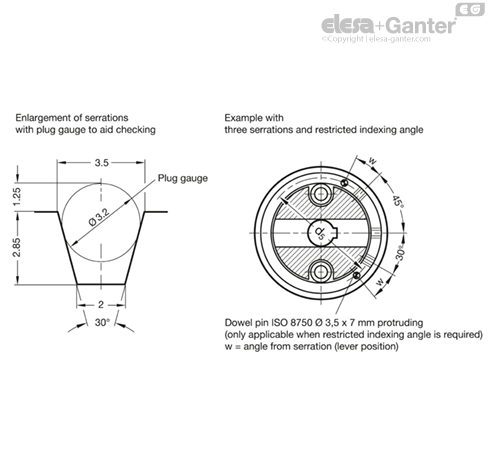
The location pin is a wedge-type as standard, which guarantees backlash-free positioning and also achieving easy engagement and disengagement.
If backlash-free positioning is not required, a dowel pin (made from a grub screw DIN 915-M6x14) can be used. The serrations can be made square or with dowels and suitable holes. Such holes have to be made large enough to ensure that the dowel is not restricted on engagement (lever swivel radius).
Smallest available angle for special serrations:
11º for size 54
9º for size 60
Smaller angles can be acheived with suitable serrations and dowels.