


 Technical datasheet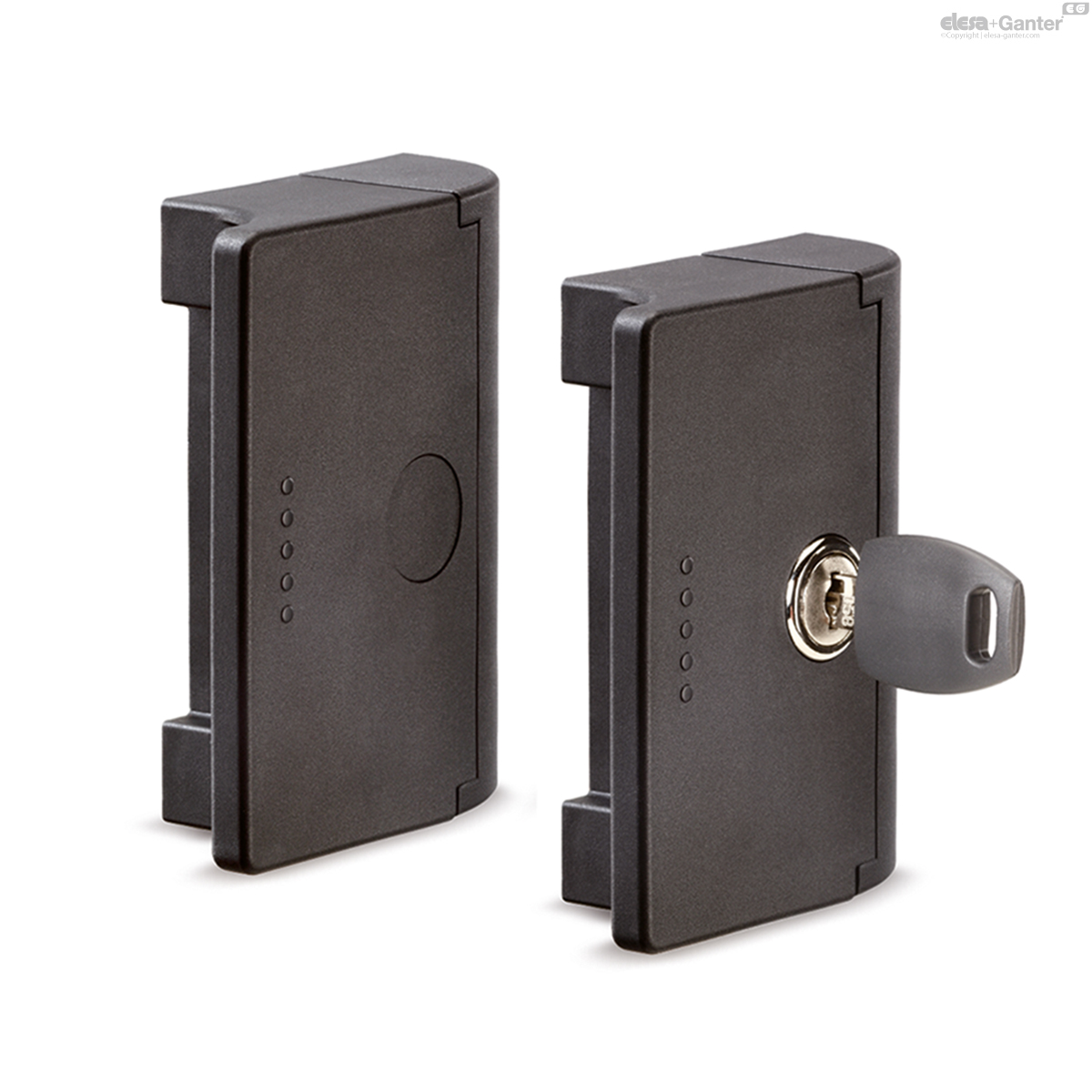
ESCPoignées de serrure de porte
Poignées de serrure de porte
avec ou sans serrure intégrée, technopolymère
|
Code
|
Description
|

|
|---|---|---|
|
|
|
|
|
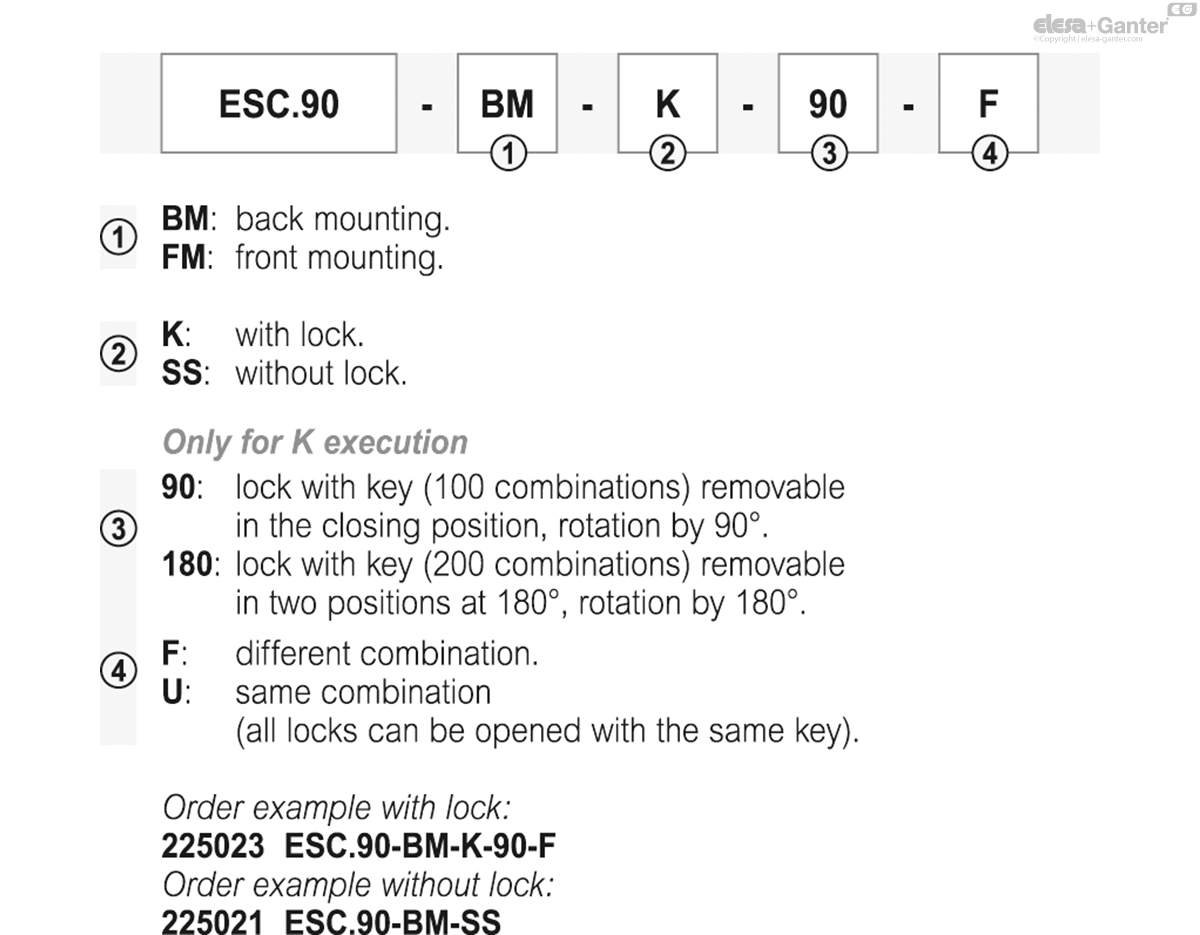
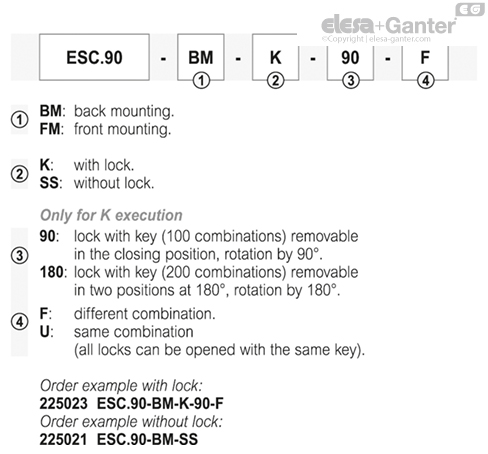
225021
|
ESC.90-BM-SS
|
107
|
|
225023
|
ESC.90-BM-K-90-F
|
127
|
|
225025
|
ESC.90-BM-K-180-F
|
120
|
|
225029
|
ESC.90-BM-K-90-U
|
104
|
|
225031
|
ESC.90-BM-K-180-U
|
104
|
|
225022
|
ESC.90-FM-SS
|
85
|
|
225024
|
ESC.90-FM-K-90-F
|
125
|
|
225026
|
ESC.90-FM-K-180-F
|
115
|
|
225030
|
ESC.90-FM-K-90-U
|
125
|
|
225032
|
ESC.90-FM-K-180-U
|
115
|

Handle
Glass-fibre reinforced polyamide based (PA) technopolymer, black colour, matte finish. Acetal resin based (POM) technopolymer retention wings.
Stator and rotor
Nickel-plated zinc alloy.
Closing lever
Zinc-plated steel, 2 mm thickness.
Two keys
Nickel-plated brass.
Standard executions
Features and applications
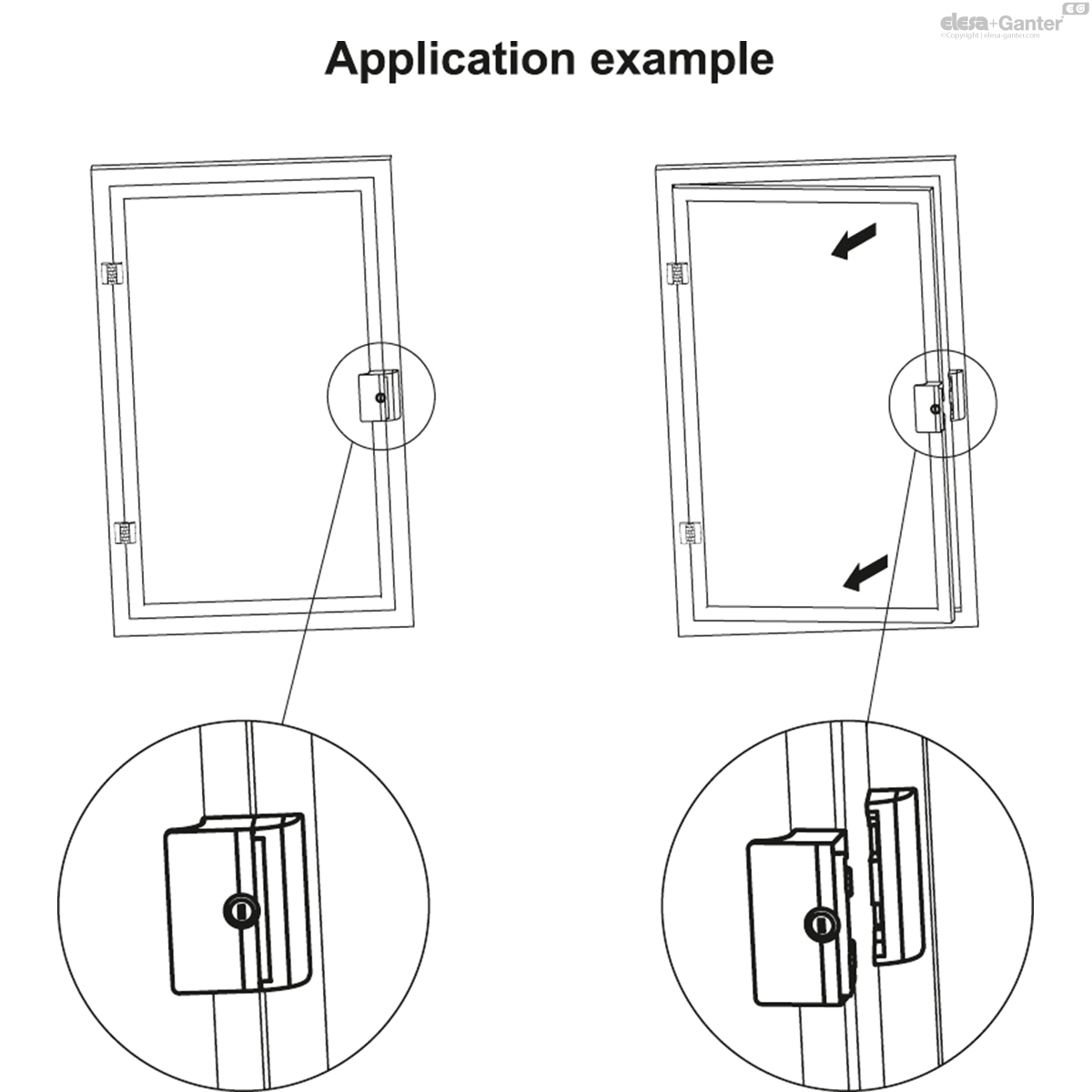
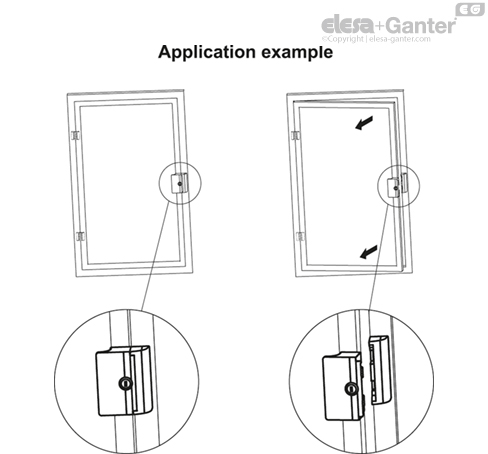
- ESC door lock handle (ELESA patent) keeps the door locked in the closed position. Because of its location outside the door, its installation is very simple.
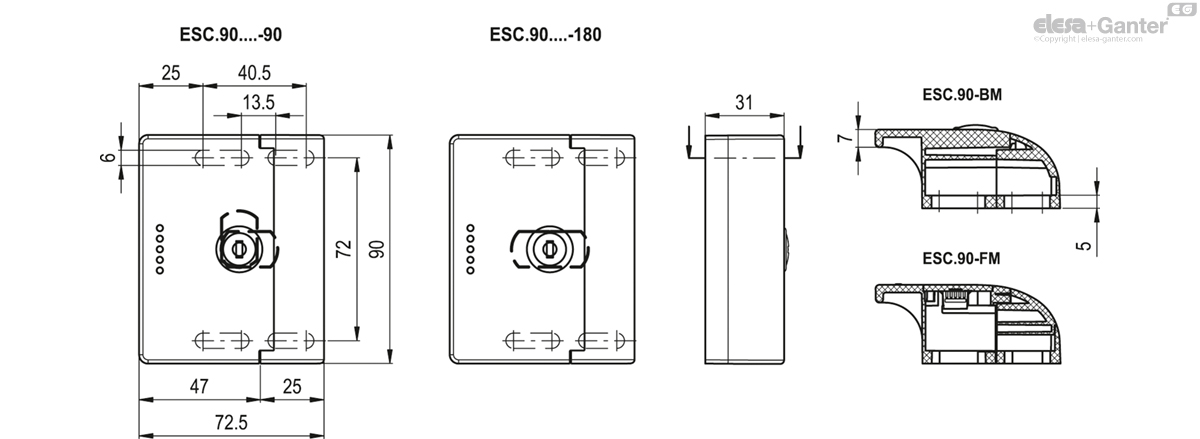
- The handle dimensions are such as to allow the assembly on profiles with a minimum size of 25 mm and a maximum of 40 mm.
- The handle is able to compensate for any misalignment of the door bringing it back to the correct position while closing by means of the built-in guides.
- The handle is tamperproof from the outside thanks to the rear fastening (ESC.90-BM) or front fastening (ESC.90-FM) with caps not removable when the handle is closed and preventing access to the screws.
- Under specific tests the handle has always maintained unchanged performance for over 40000 cycles.
Assembly instructions
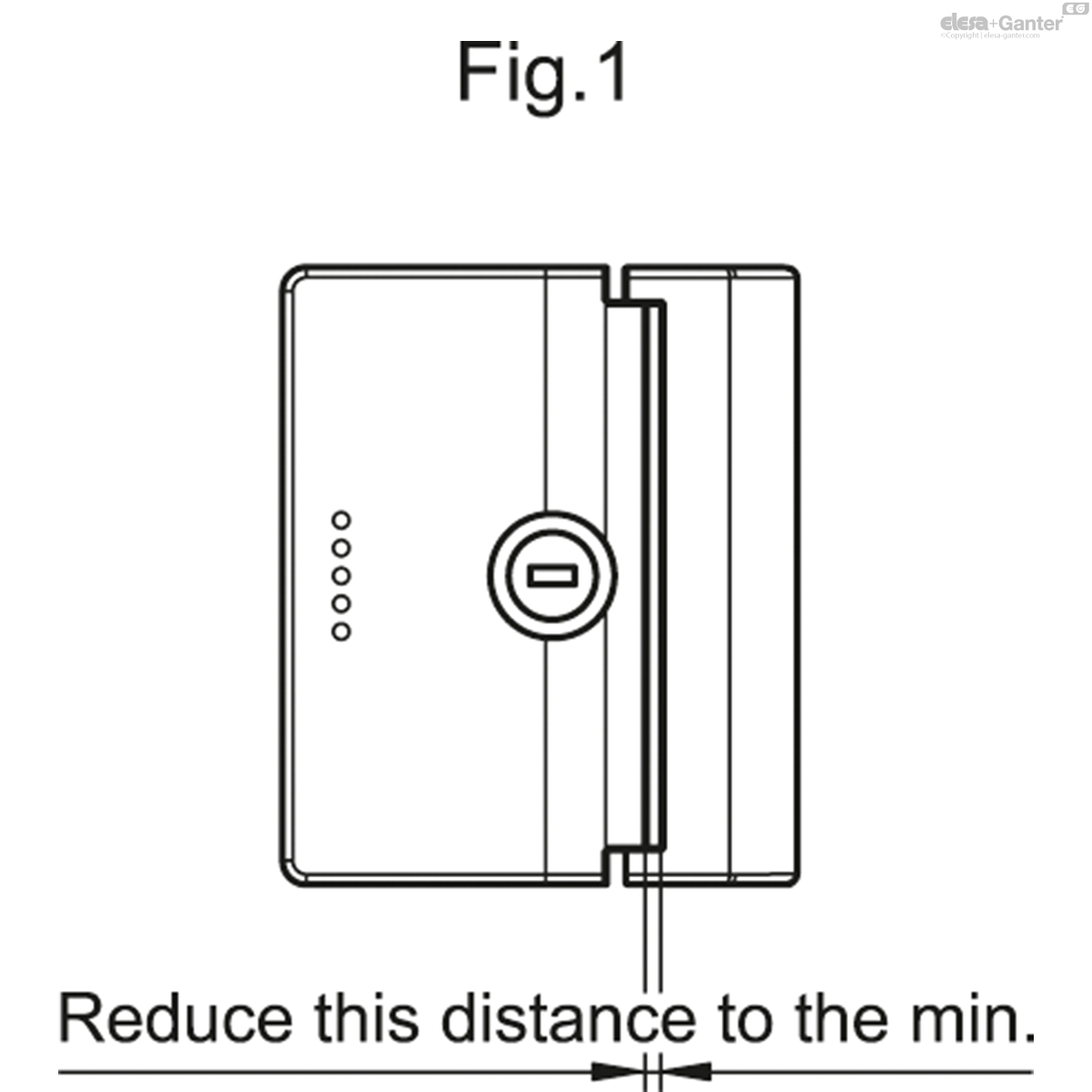
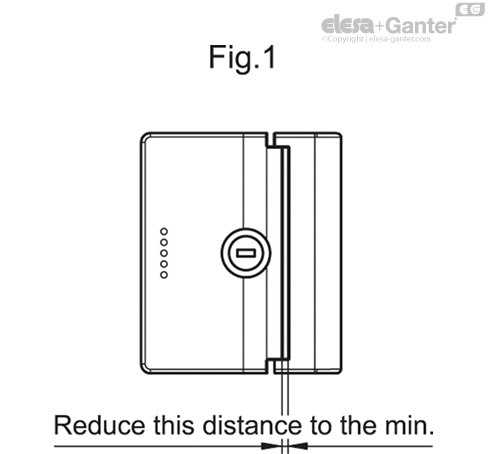
To ensure a correct opening release strength (45 N as long as the handle is assembled in best conditions), we recommend to position the two elements of the handle as close as possible (Fig. 1) during assembly.
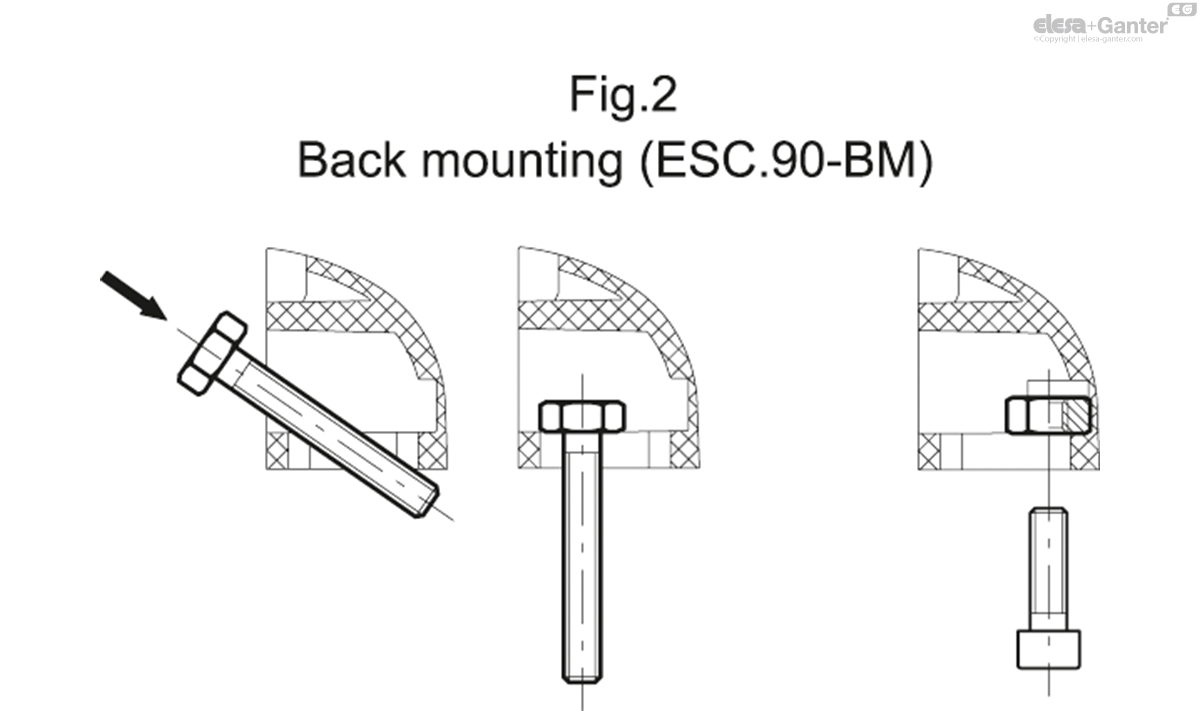
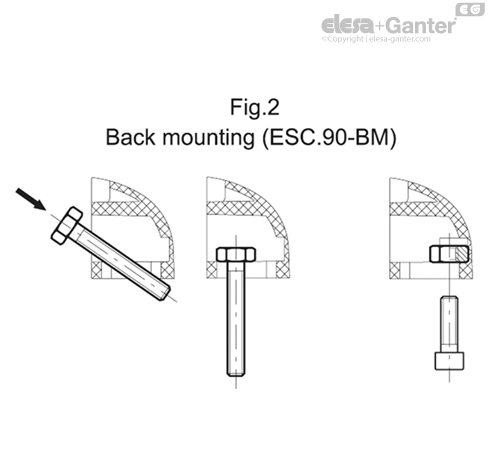
Rear mounting by means of M6 hexagonal-head screws DIN 933 or M6 hexagonal nuts DIN 439B: place the screw as shown in Fig. 2. For ease of assembly with the nut, we recommend initially to fasten the nut as shown in the drawing.
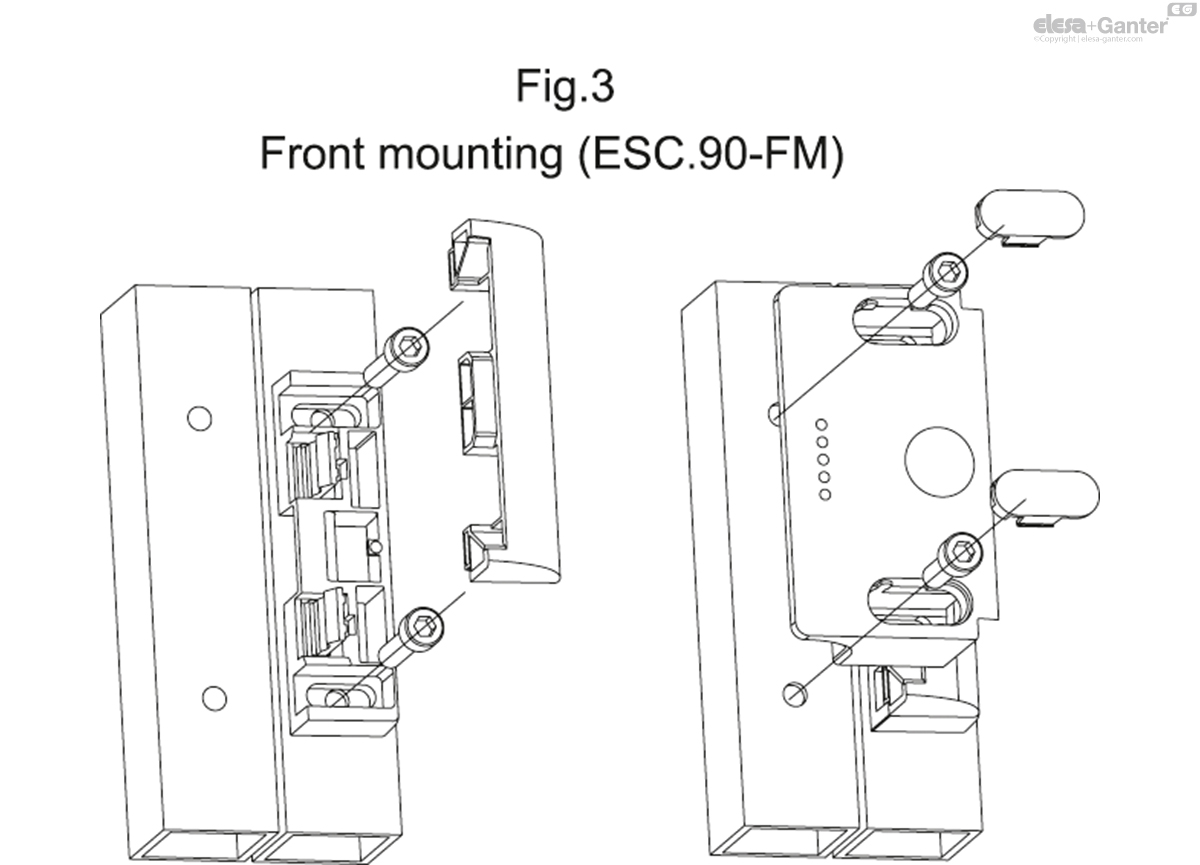
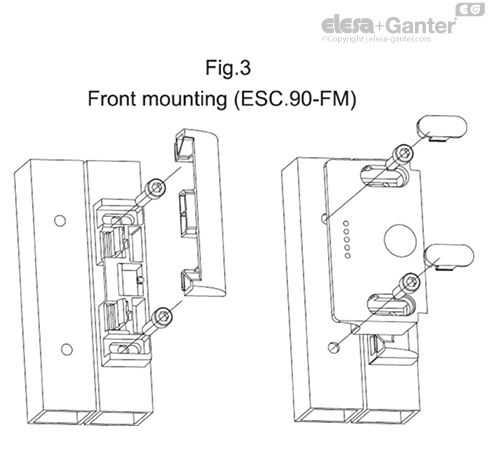
Front mounting by means of M6 cylindrical-head screws: place the doorframe and the door by applying the relevant caps that prevent access to the screws (Fig. 3) (tamperproof).
Suggested tightening torque: 5 Nm.
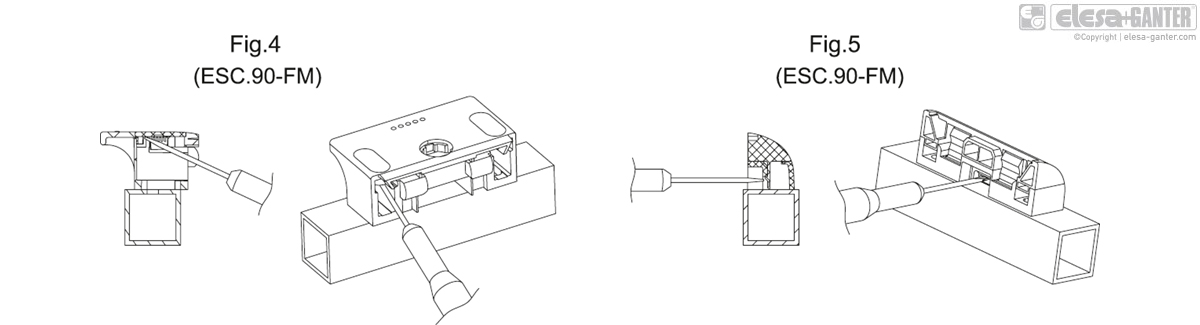
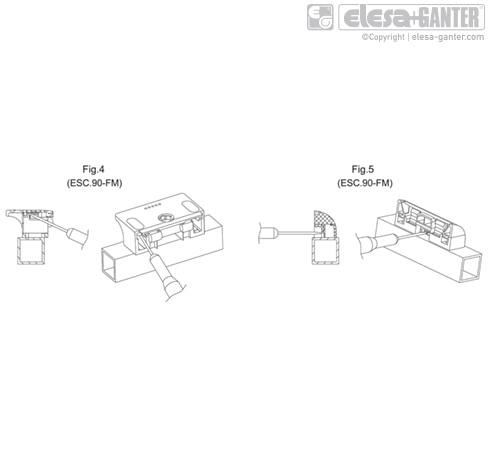
Only when the door is open, it is possible to remove the caps with a screwdriver on both the door (Fig. 4) and the doorframe (Fig. 5).
Produits associés

BMS
Verrouillage instantané
Technopolymère
BPS
Serrure de porte en forme de boule
Technopolymère
CSMH
Loquets avec poignée de poussée
Alliage de zinc

CSMT.
Loquets à levier avec poignée en T
Fonctionnement avec clé, technopolymère

GN 115.10
Poignées encastrables avec loquet
Fonctionnement avec clé, verrouillable / non verrouillable

GN 315
Serrures à pression
Distance de verrouillage A1 / A2 réglable

GN 315.1
Serrures à pression
Deux distances de verrouillage A