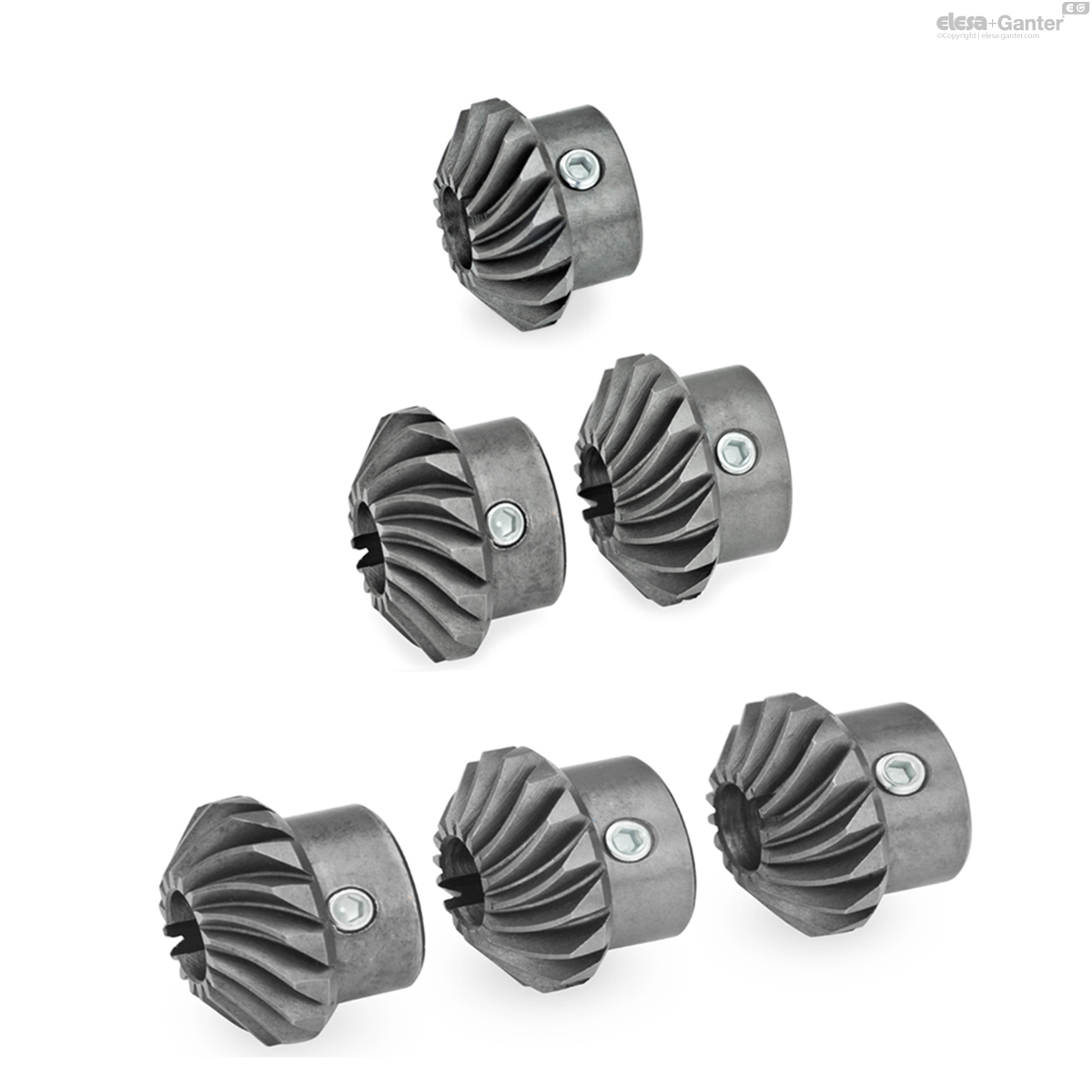
297-33-K12-R GN 297 Roues dentées de commande

Délai: 3-4 semaines
Prix, stock en temps réel & téléchargements CAO
Connectez-vous pour voir vos prix et le stock, télécharger les fichiers CAO et commander directement en ligne.
Se connecter Demander un compte Fiche technique
Caractéristiques techniques
- Code
- GN 297-33-K12-R
- d1
- 40 / 50
- d2
- 33
- d3 H7 Bore
- K 12
- b
- 4
- d4
- M 6
- l1
- 23.5
- l2
- 31

- 72
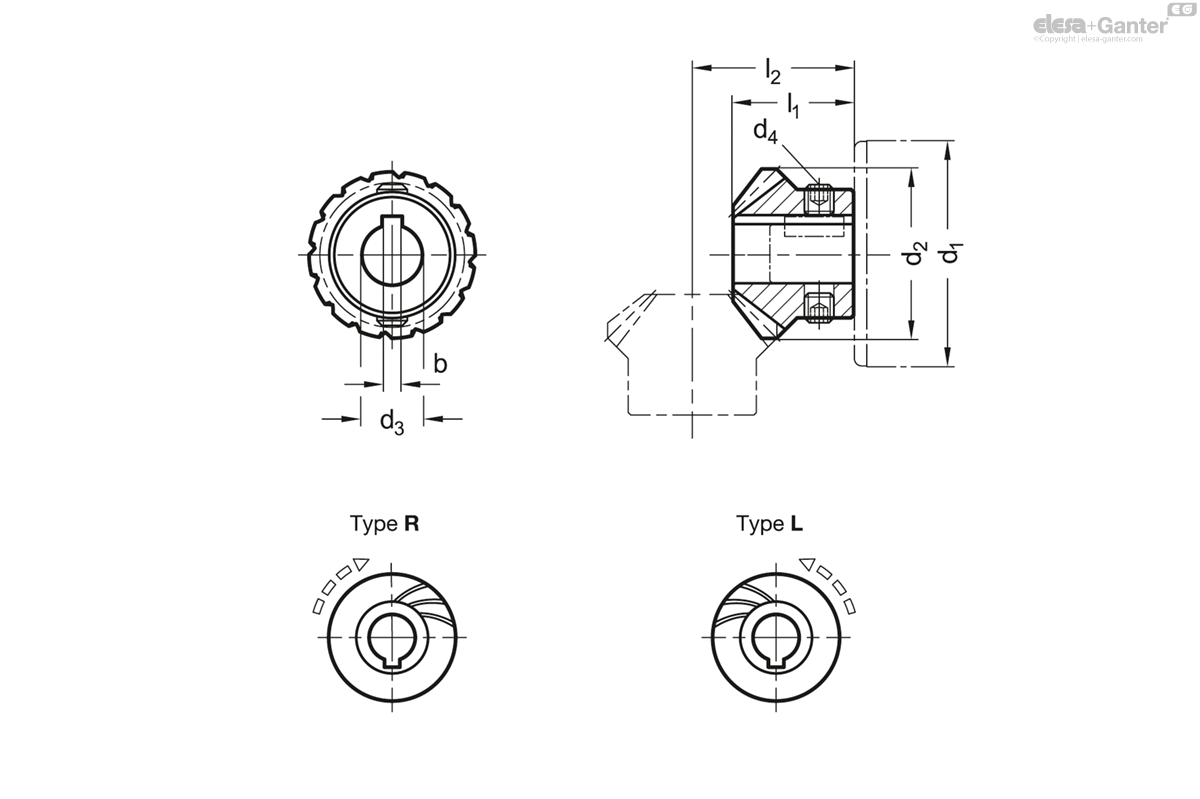
Types
- Type R: Bevel gear wheel, right-hand pitch
- Type L: Bevel gear wheel, left-hand pitch
- Type W: Set of bevel gears, 2 bevel gears, 1 x right-hand pitch, 1 x left-hand pitch
- Type T: Set of bevel gears, 3 bevel gears, 1 x right-hand pitch, 2 x left-hand pitch
Steel
Hardened
Teeth milled
Bevel gear wheels GN 297 are used for angular / T-gears in connection with linear actuators / transfer units GN 391and housing GN 298 .
The spiral bevel facilitates both setting the desired clearance and locating the correct position of the bevel gears. Also, gears set up this way run with extremely low noise levels.
Two bevel gears are needed for an angular gear, three bevel gears are needed for a T-gear. These are available as set in type W resp. type T.
Please note that only bevel gears with different pitches can be paired. The transmission ratio is always 1:1, because the bevel gears always have the same number of teeth.
- Assembly and application examples of Transfer units (see page
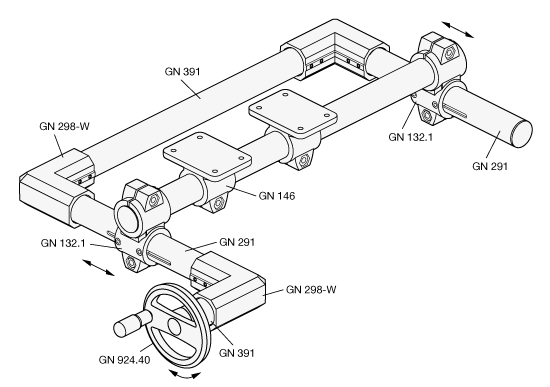
Two parallel sliding linear actuators GN 291 are connected with a transfer unit GN 391.
The angular housings GN 298-W including the bevel gear wheels GN 297 and another transfer unit GN 391 connect the handwheel with the system. The handwheel is placed in a rectangular position to the moving axes.
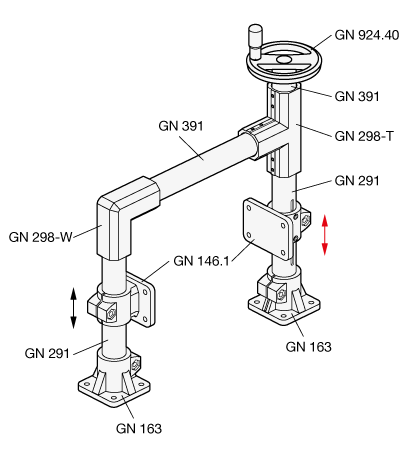
Two flanged linear actuator connectors GN 146.1 are moved parallel. For this two linear actuators GN 291 are connected with a transfer unit GN 391.
The T- and angular gear GN 298-T/-W including the bevel gear wheels GN 297 and another transfer unit GN 391 connect the handwheel with the system. The handwheel is placed in a parallel position to the moving axes.