


 Technical datasheet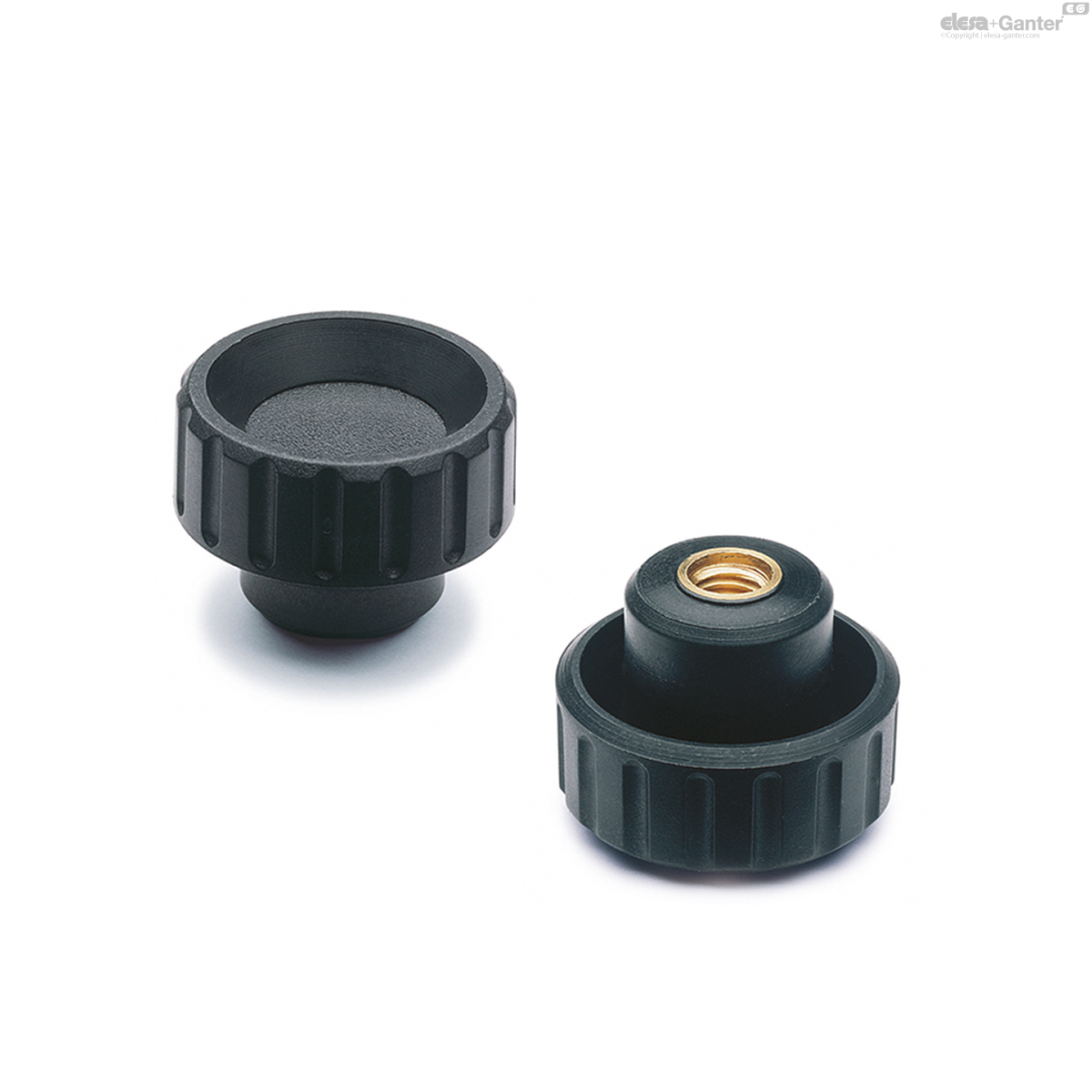
BT-B-ESDBoutons cannelés
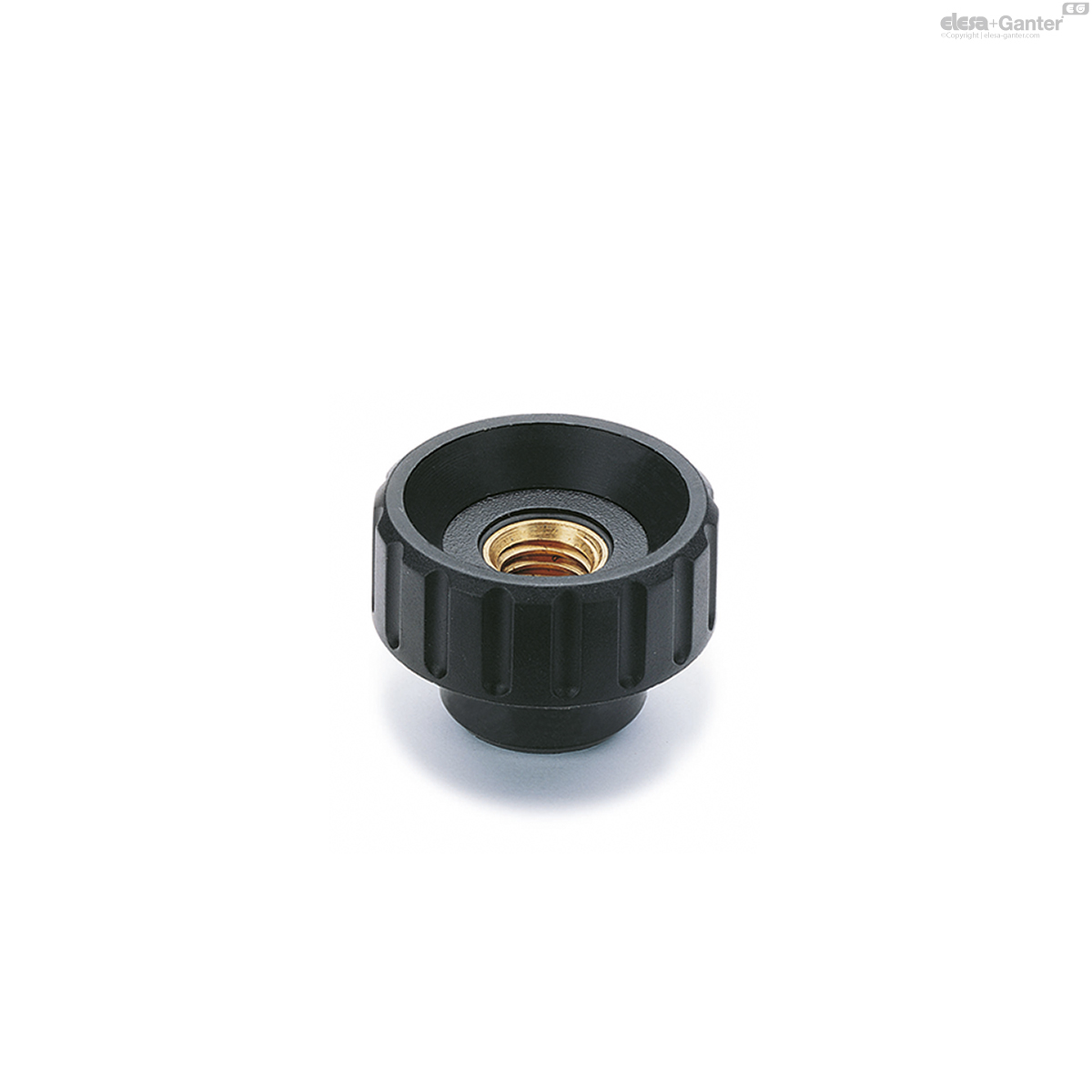
Bossage en laiton , trou borgne fileté
Technopolymère conducteur ESD
|
Code
|
Description
|
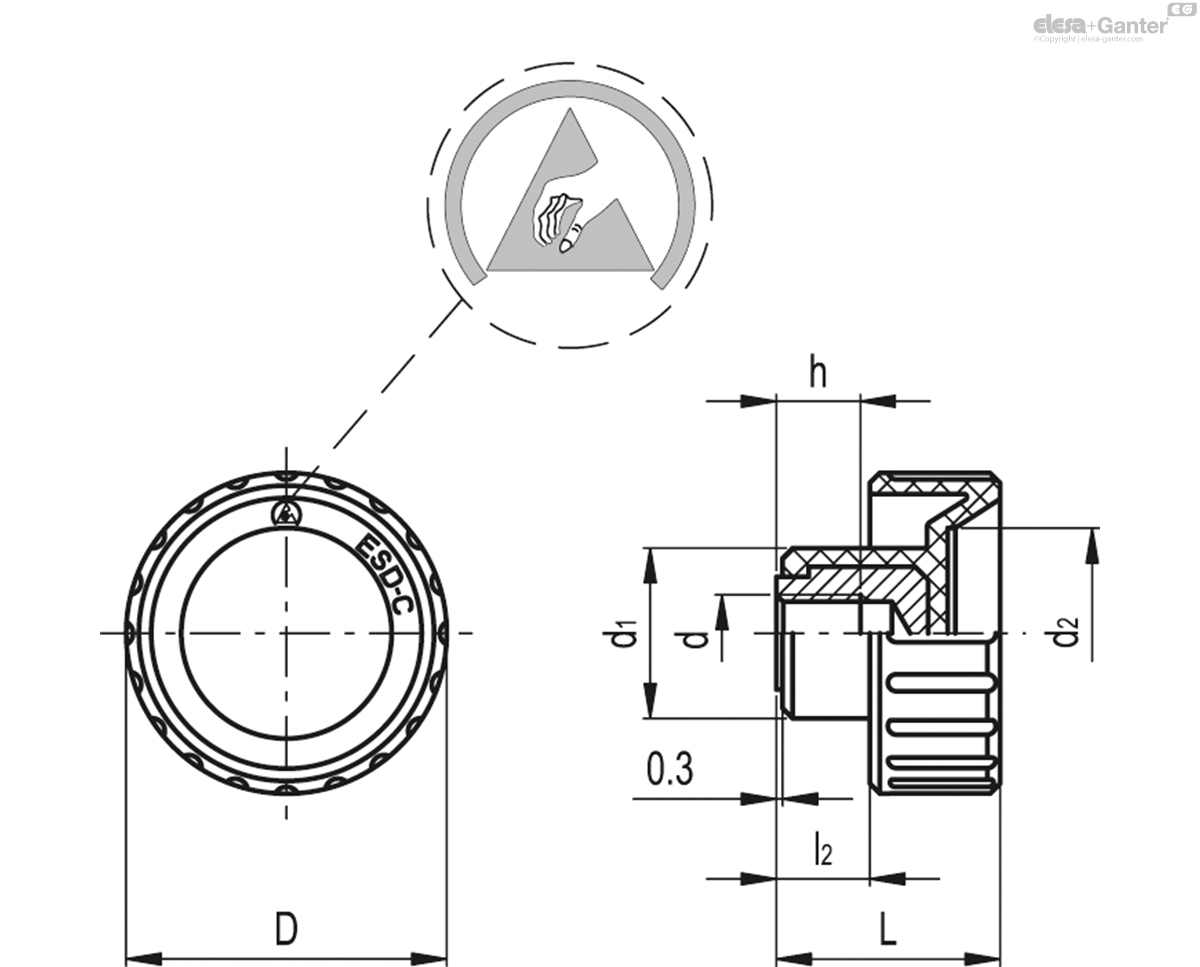
D
|
d6H
|
L
|
d1
|
d2
|
l2
|
h
|

|
|---|---|---|---|---|---|---|---|---|---|
|
|
|
|
|
|
|
|
|
|
|
|
154121
|
BT.16 B-M4-ESD-C
|
16
|
M4
|
13
|
11
|
9
|
5
|
6
|
4
|
|
154221
|
BT.20 B-M5-ESD-C
|
20
|
M5
|
15
|
11.5
|
11
|
6
|
6
|
6
|
|
154321
|
BT.25 B-M6-ESD-C
|
26
|
M6
|
19
|
16
|
15
|
8
|
8
|
9
|
|
154421
|
BT.32 B-M8-ESD-C
|
32
|
M8
|
22
|
17
|
21
|
9
|
10
|
15
|

Material
Glass-fibre reinforced polyamide based (PA) special conductive technopolymer, black colour, matte finish. 103 Ω surface resistivity (ASTM D257 trial method), 103 Ω·cm volume resistivity (ASTM D257 trial method).
Standard executions
- BT-B: brass boss, threaded blind hole.
- BT-FP: brass boss, threaded through hole.
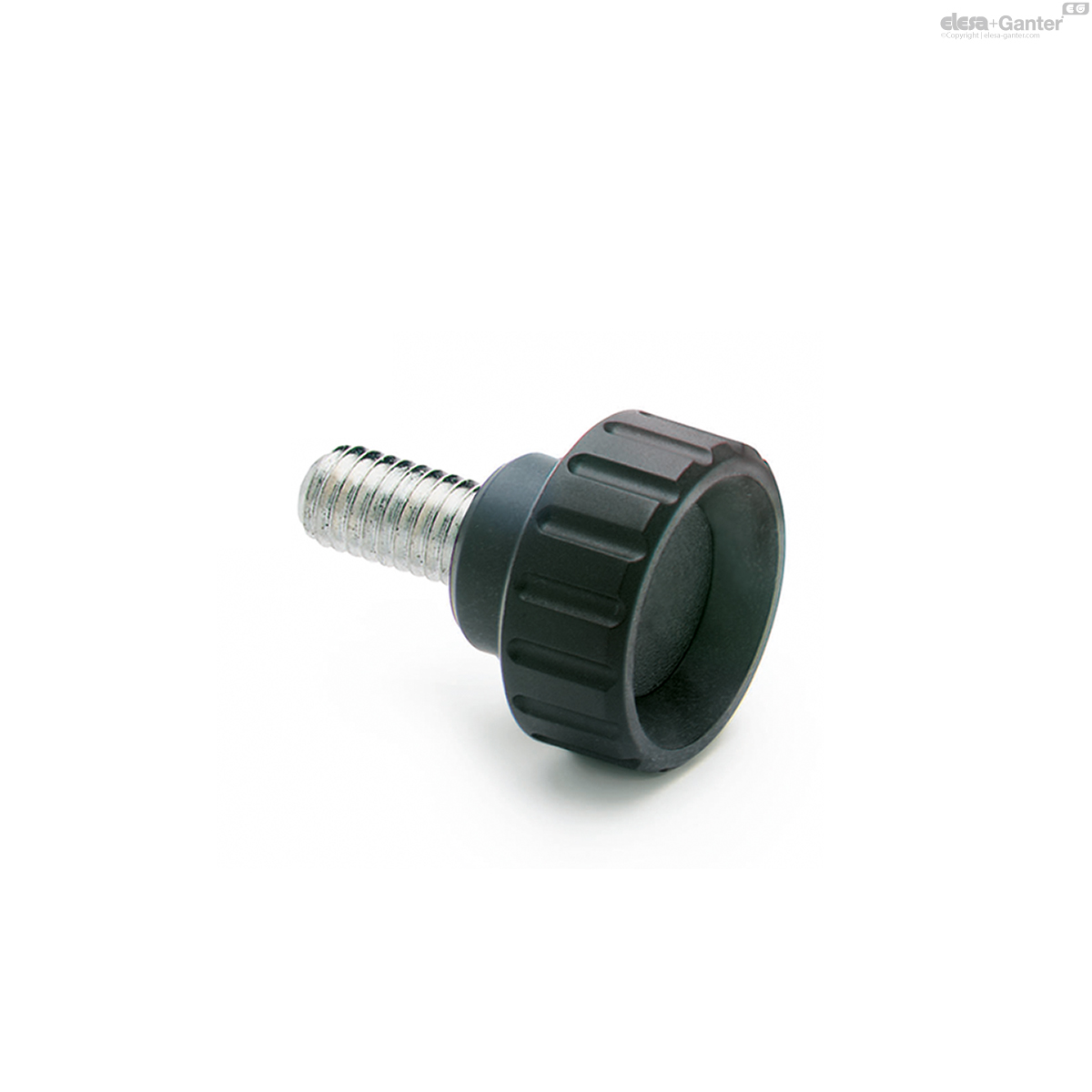
- BT-p: zinc-plated steel threaded stud, chamfered flat end according to UNI 947 : ISO 4753 (see Technical data).
Features and applications
The special conductive technopolymer (ESD-C Electrostatic Discharge Conductive) prevents the accumulation of electrostatic charge. BT-ESD knobs are suitable for ESD PROTECTED AREA (EPA) where components which are susceptible to electrostatic discharges are to be handled with the minimum risk of damage. The indelibly printed mark (ESD-C) on the surface of the knob identifies the particular conductive feature according to EN 100015/1 and IEC 61340-5-1.
Produits associés

BT-B
Boutons cannelés
Technopolymère

DIN 6336-AL
Boutons étoiles
Fonte / Acier inoxydable / Aluminium

GN 433-NI
Vis à oreilles
Acier inoxydable
GN 434-NI
Écrous à oreilles en acier inoxydable
GN 7336-ST
Boutons moletés / Vis moletées

LV.A-ESD-C
Pieds de nivellement
Base en technopolymère conducteur ESD, tige en acier
LV.A-SST-ESD-C
Éléments de nivellement
Base en technopolymère conducteur ESD, tige en acier inoxydable

M.443-CH
Poignées étriers
Poignées étriers